OECTA Hamilton-Wentworth crest OECTA Hamilton–Wentworth  ·  Our History

Labour & Teachers’
History

The teachers of Hamilton-Wentworth stand in a long line of working people who organized and won. This is that story — from the Nine-Hour Pioneers to the founding of OECTA and the fights that followed — told with OECTA’s own history books, readable here in full.

Read the books ↓
Eight decades of organizing — and the century before

Teachers did not win their rights alone, or all at once. Each stop below is drawn from credible, cross-checked sources — union and university histories, public archives, and OECTA’s own record — with Hamilton’s part of the story kept in view. Where OECTA’s books tell more, a link jumps you straight to the page.

1872
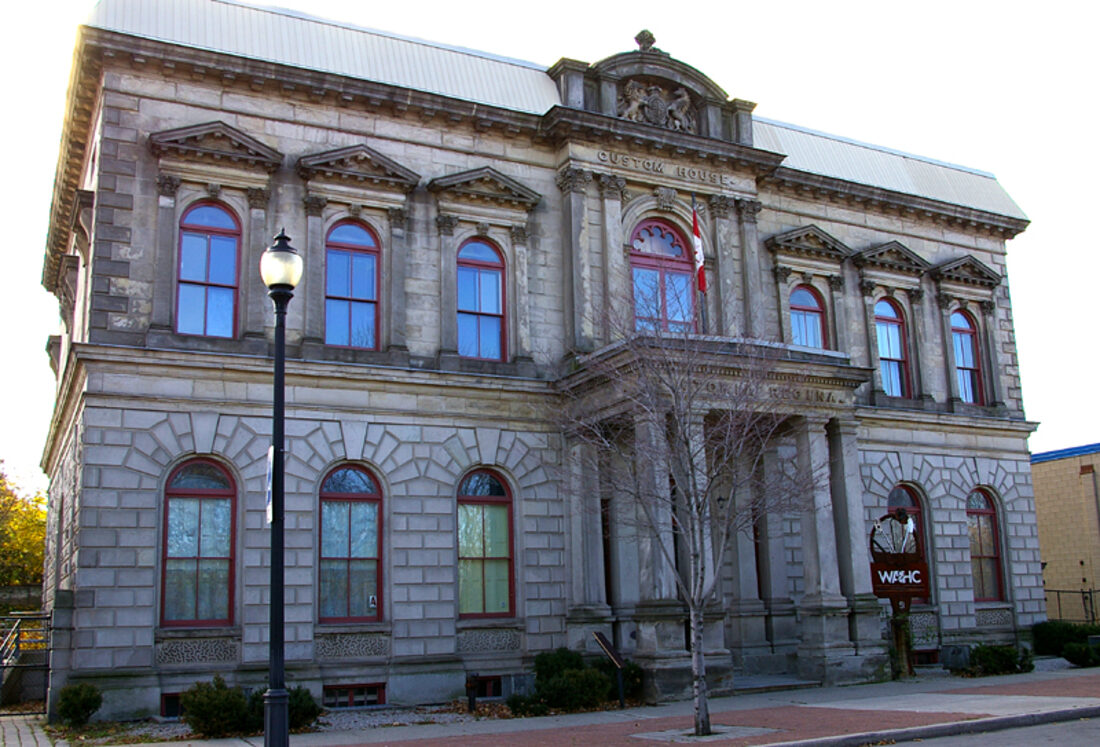
The 1860 Custom House, passed by the 1872 marchVlad Litvinov · CC BY 2.0
Where it began

The Nine-Hour Pioneers

Hamilton workers organized before almost anyone else. In the spring of 1872 they founded a Nine-Hour League, and on May 15, 1872 some fifteen hundred of them marched through the city for a shorter working day — one of the first organized movements for working hours in Canada, remembered ever since as the “Nine-Hour Pioneers.” The teachers who would later organize stood on ground these workers broke.

Learn more →
1909–
1953
Teachers · Hamilton

The Hamilton Normal School

Teacher training came to Hamilton in 1909, when the Hamilton Normal School opened in the city’s West End and began preparing generations of elementary teachers. It served for more than four decades until fire destroyed the building on New Year’s Eve, 1953. Among those it shaped were teachers who would go on to lead their profession.

Learn more →
1928–
1944
Before the union

Why the teachers organized

Catholic teachers organized out of hard necessity. A 1928 Privy Council ruling (the Tiny Township case) let Ontario deny funding to separate schools beyond grade eight, throwing Catholic education into a long fiscal crisis. Through the Depression, teachers bargained alone, school boards threatened pay cuts, and women teachers were paid less by rule — the Hamilton board itself moved to close kindergartens and lay off thirty-three teachers. Low-paid religious orders, who turned their wages over to their communities, undercut lay salaries further. The case for a union made itself.

Learn more → Read the background → p.3
1944
A union is born

OECTA is founded

On February 18, 1944, diocesan delegates agreed to form a single provincial English Catholic teachers’ association, and OECTA held its first provincial meeting that Easter. That April, the Teaching Profession Act created the Ontario Teachers’ Federation with five affiliates — OECTA among them — giving Catholic teachers statutory standing for the first time. The founding president was Margaret Lynch; within a year Hamilton’s own Father Bernard Harrigan became OECTA’s second provincial president.

Learn more → Read it in the book → p.34
1946
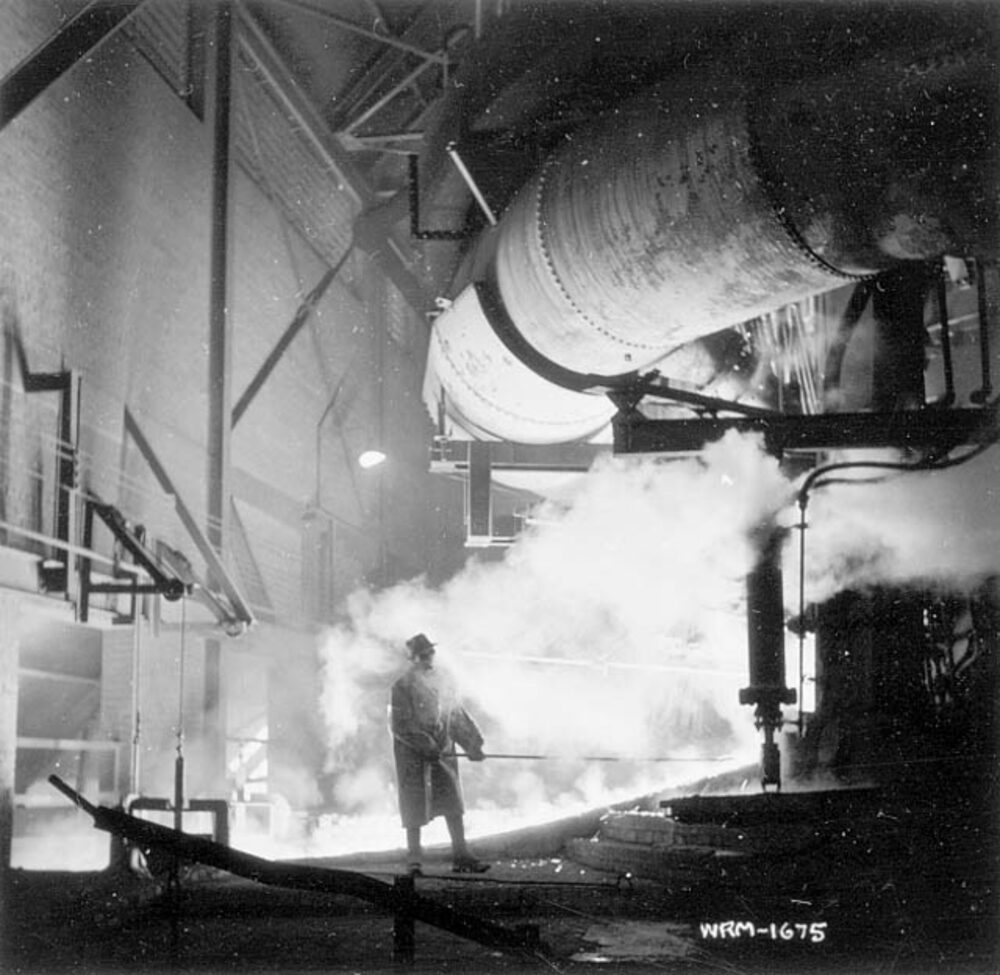
A steelworker at a Stelco open-hearth furnaceLibrary and Archives Canada · CC BY 2.0
81 days

The Stelco Strike

Hamilton earned its name as a union town. In 1946 steelworkers struck Stelco for eighty-one days; with Westinghouse out too, thousands of Hamiltonians walked. The victory helped secure union recognition for USW Local 1005 and won the forty-hour week — a milestone in Canadian labour history, in the city where the teachers’ own union would also take root.

Learn more →
1973
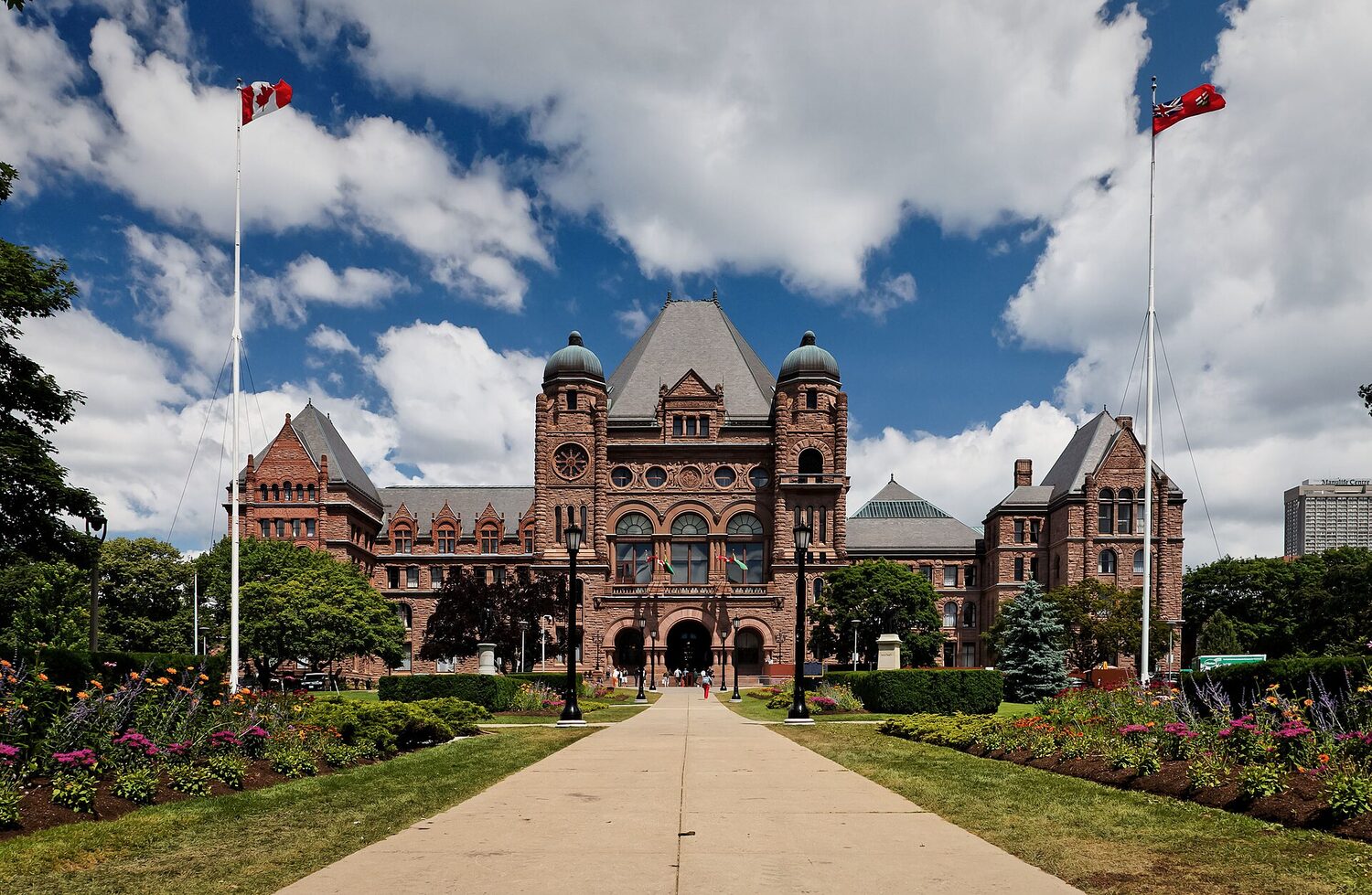
The Legislature at Queen’s Park, TorontoBenson Kua · CC BY-SA 2.0
Teachers · the right to strike

105,000 teachers walk

On December 18, 1973, roughly ninety thousand of Ontario’s teachers — OECTA among the five affiliates — walked out together over the right to negotiate, closing schools across the province. It was the moment Ontario’s teachers found their collective power, and it set the stage for full bargaining rights two years later.

Learn more → Read it in the book → p.303
1975
Teachers · the law changes

Bill 100 — the right to strike, in law

The 1973 walkout bore fruit. Bill 100, the School Boards and Teachers Collective Negotiations Act of 1975, gave Ontario’s teachers full collective bargaining and the legal right to strike — the framework under which OECTA has bargained for its members ever since.

Learn more → Read it in the book → p.292
1985
Teachers · completion

Full funding for Catholic schools

The cause born of the 1928 funding crisis was finally won. Bill 30 (1985) extended full public funding to Ontario’s Catholic secondary schools, completing a system that had run on tuition and sacrifice for generations — the “completion” OECTA had campaigned for across decades. Across Ontario, Catholic communities — Hamilton among them — had long funded and staffed their own secondary schools out of their own pockets.

Learn more → Read it in the book → p.440
1987
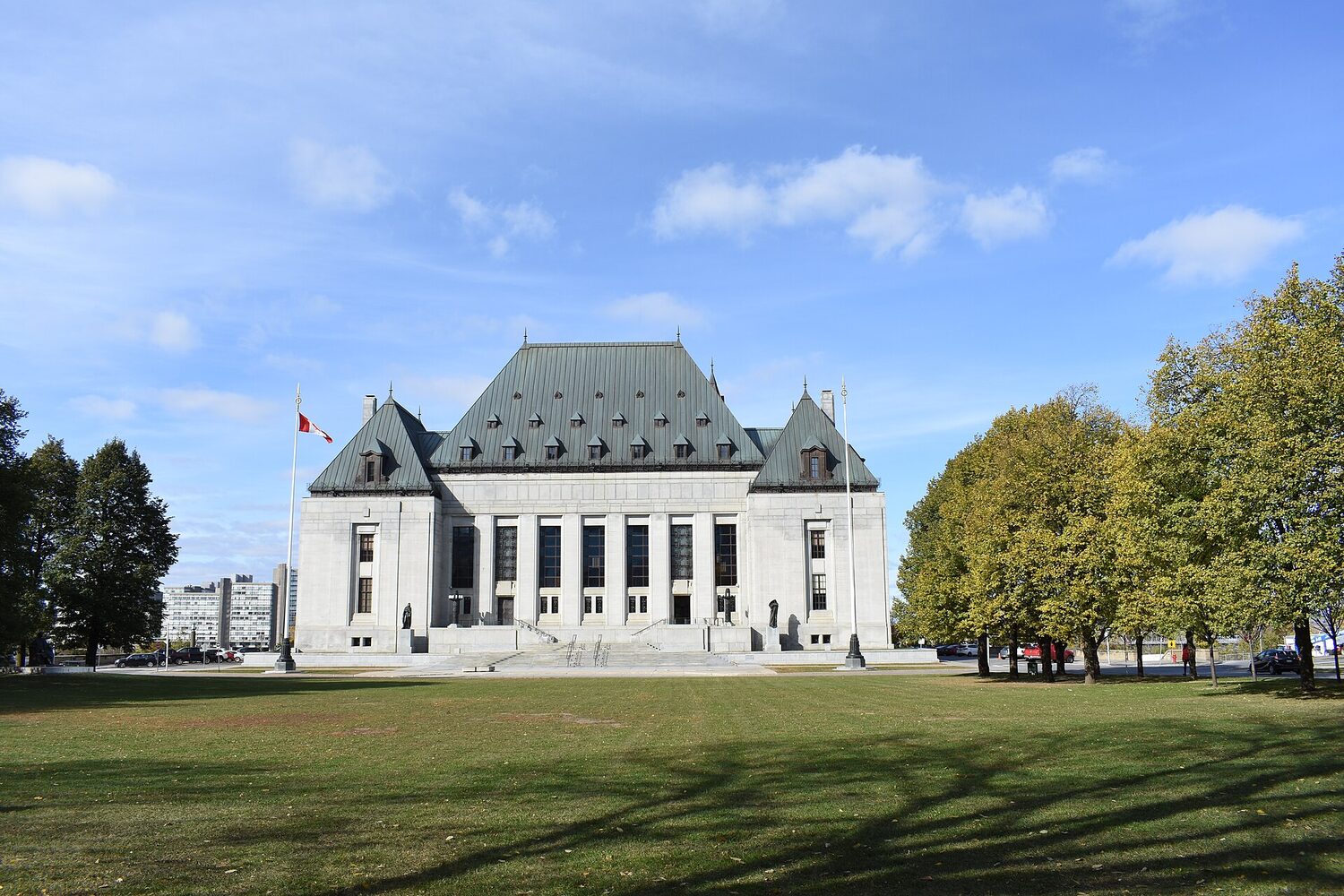
The Supreme Court of Canada, OttawaJon Kolbert · CC BY-SA 4.0
Teachers · upheld

The Supreme Court agrees

When Bill 30 was challenged, the Supreme Court of Canada upheld it in 1987, confirming that full funding for Catholic high schools was constitutional under the protections Ontario’s separate schools had carried since 1867. The win was permanent.

Learn more → Read it in the book → p.402
1989–
1990
Copps Coliseum, Hamiltonpublic domain
Teachers · Hamilton · the pension

25,000 teachers fill Copps Coliseum

On April 1, 1989, more than twenty-five thousand teachers — OECTA among them — packed Hamilton’s Copps Coliseum to demand a real voice in their own pension. The pressure helped create the Ontario Teachers’ Pension Plan in 1989–90, jointly sponsored by teachers and the province — today one of the world’s most respected pension funds, and a lasting teacher–government partnership.

Learn more → Read it in the book → p.205
1995
Teachers · joining the movement

OECTA joins the labour movement

In 1995 OECTA affiliated with the Ontario Federation of Labour, formally aligning Catholic teachers with the broader movement of working people — the same movement Hamilton’s steelworkers and Nine-Hour Pioneers had built. The alliance would be tested almost at once.

Learn more → Read it in the book → p.7
1996
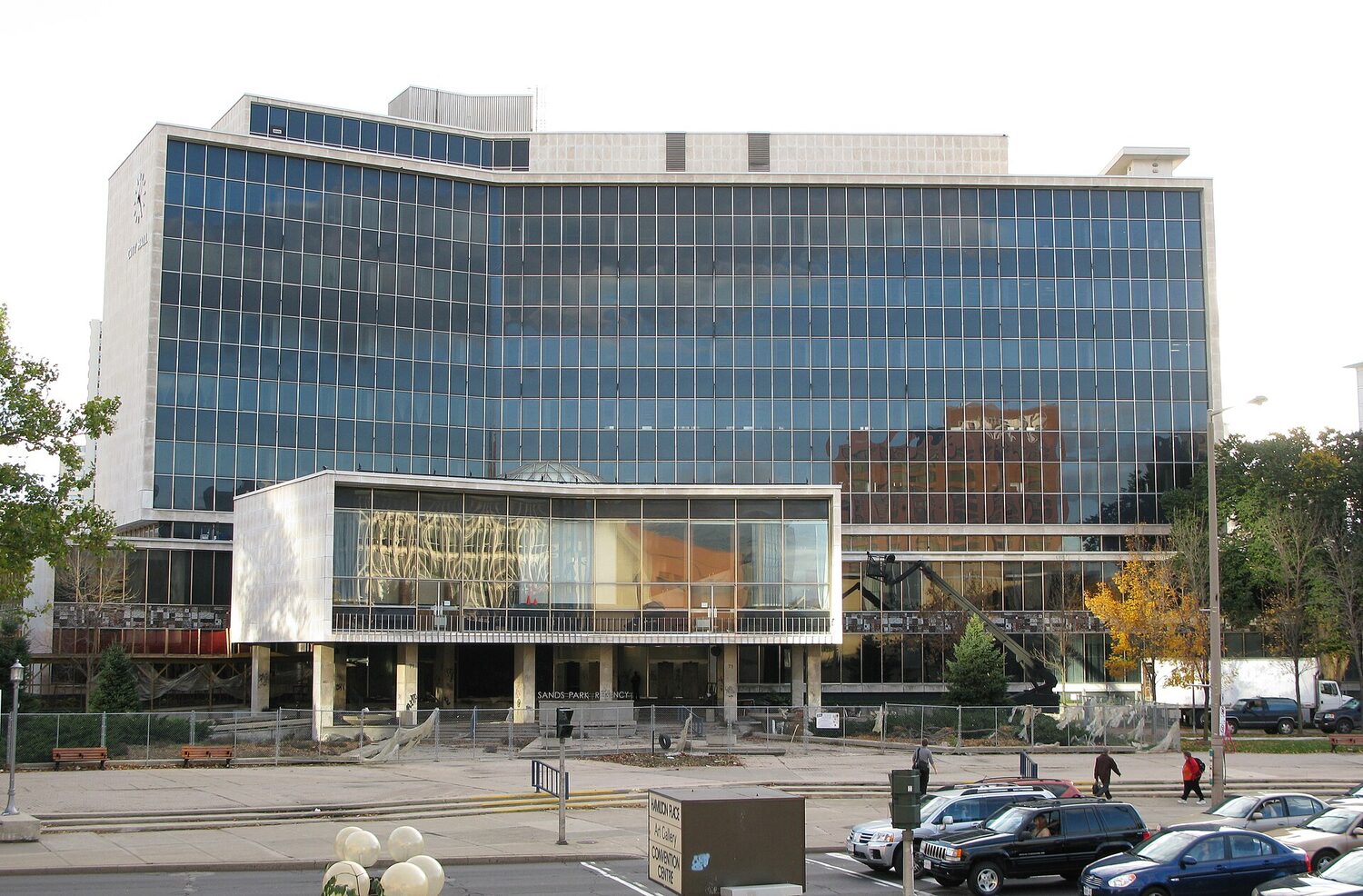
Hamilton City HallSaforrest · CC BY-SA 3.0
Hamilton · the Day of Action

Steeltown shuts down

On February 23–24, 1996, Hamilton staged one of the largest labour demonstrations in Canadian history — a one-day general strike followed by a march of more than a hundred thousand people, against the Harris government’s cuts. Teachers marched alongside every other union; having just joined the OFL, OECTA was part of the wall of people.

Learn more →
1997
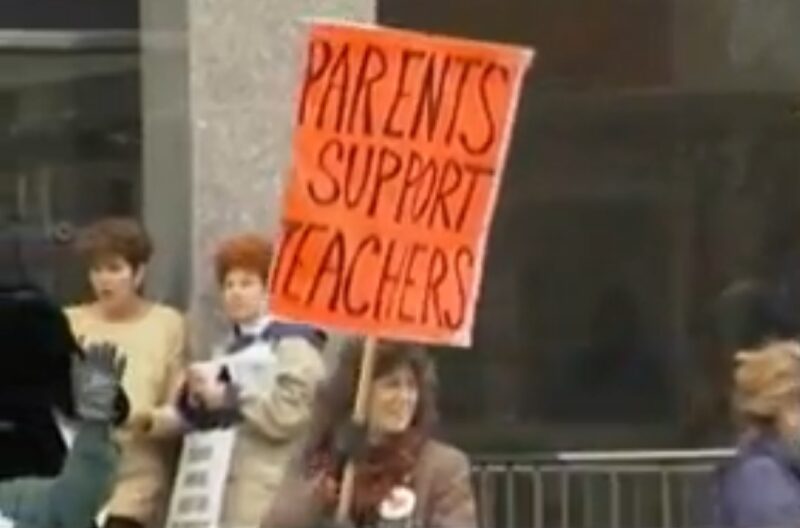
The 1997 Ontario teachers’ protestRankandfile.ca · CC BY 3.0
Teachers · the largest walkout

The Bill 160 protest

For two weeks in the autumn of 1997, about one hundred and twenty-six thousand Ontario teachers — public and Catholic together, OECTA included — walked out against Bill 160, closing nearly every school in the province, Hamilton’s Catholic teachers among them. The rallies filled arenas from Maple Leaf Gardens to Queen’s Park; at the time, it was the largest teachers’ walkout in North American history.

Learn more → Read it in the book → p.9
1998
One board for the county

Amalgamation

The Fewer School Boards Act (Bill 104) of 1998 redrew Ontario’s school map, merging boards into larger districts — here, the Hamilton-Wentworth Catholic District School Board. For OECTA’s local units it meant new structures and a new scale of bargaining across the whole county.

Learn more → Read it in the book → p.10
2020
Teachers · Hamilton walks

Catholic teachers on the line

The fight carried into our own time. On February 4, 2020, Ontario’s Catholic teachers walked out in a province-wide one-day strike — every Hamilton-Wentworth Catholic school closed — as OECTA members stood up over class sizes, mandatory e-learning, and fair bargaining.

Learn more → Read it in the book → p.13
Today
Here, now

A union of 45,000 — and a partnership that endures

OECTA today represents some forty-five thousand Catholic teachers across Ontario, with elementary and secondary units here in Hamilton-Wentworth. The pension teachers rallied for at Copps Coliseum is now the Ontario Teachers’ Pension Plan, a teacher–government partnership that has become a model worldwide. From the Nine-Hour Pioneers to today, this is one continuous story — and it is yours.

Learn more → Read it in the book → p.29

From the workers who built Canada’s first labour council here, through the Nine-Hour Pioneers, to the teachers who filled Copps Coliseum — the rights you defend for your members were won by people who organized, and won.

The reading room

OECTA publishes its history openly. Both books below are readable here in full — searchable, page by page — in our own reader. Two short films from OECTA round out the story.

The full history · 1944–1994

Be a Teacher

Robert T. Dixon for OECTA · 574 pages

The definitive history of OECTA’s first fifty years — the founding, the funding fight, and the long road to bargaining rights — readable here, page by page. The “read it in the book” links throughout this page open it to the exact spot.

Open the book →
The short history · 2021

The History of OECTA

OECTA Communications · 30 pages

A concise, up-to-date overview that carries the story through the 1997 and recent fights to today — readable here in our own reader, page by page, fully searchable.

Open the book →
Watch on OECTA ↗The History of OECTA

OECTA’s own short film on eight decades of Catholic teacher unionism.

Watch on OECTA ↗The Value of Catholic Education

Why publicly-funded Catholic education matters — in teachers’ own words.

The two history books — Be a Teacher: A History of the Ontario English Catholic Teachers’ Association 1944–1994 (Robert T. Dixon) and The History of OECTA (2021) — are published openly by OECTA at catholicteachers.ca and are reproduced here in full, page by page, in our own reader, with that source credited. The two OECTA films are domain-restricted by the provincial association, so they are linked to play on OECTA’s own page rather than embedded here. Books are shown in a self-hosted Mozilla PDF.js reader (Apache-2.0). This timeline draws on cross-verified sources — union histories (ETFO, USW Local 1005, OFL), academic work (Historical Studies in Education, the CCHA, ERIC), public archives, CanLII, and OECTA’s own publications — each linked above; a full claim-by-claim sources & verification record accompanies this page. Photographs via Wikimedia Commons, credited beneath each image. Prepared by OECTA Hamilton-Wentworth; we welcome correction.